 wilsin@wilsin-mold.com


Better Touch Better Business
Contact Sales at WILSIN MOLD INDUSTRIAL (HK) CO.,LTD.
Welcome to WILSIN MOLD INDUSTRIAL (HK) CO.,LTD.!
Keep up with the latest developments in the plastic mold industry! The latest material applications, cutting-edge manufacturing technologies, and changes in market demand are presented to you. Accurately insight into industry trends to help you seize opportunities in the field of plastic molds. Real time updates, constantly exciting, come and get first-hand information!
Plastic mold is a combination mold used for compression molding, extrusion molding, injection molding, blow molding, and low foaming molding. The coordinated changes of convex and concave molds and auxiliary forming systems can process a series of plastic parts with different shapes and sizes. In order to meet the needs of molded parts, we need to pay attention to some matters when choosing plastic molds and propose corresponding requirements. Choosing a more suitable plastic mold below requires meeting the following six requirements.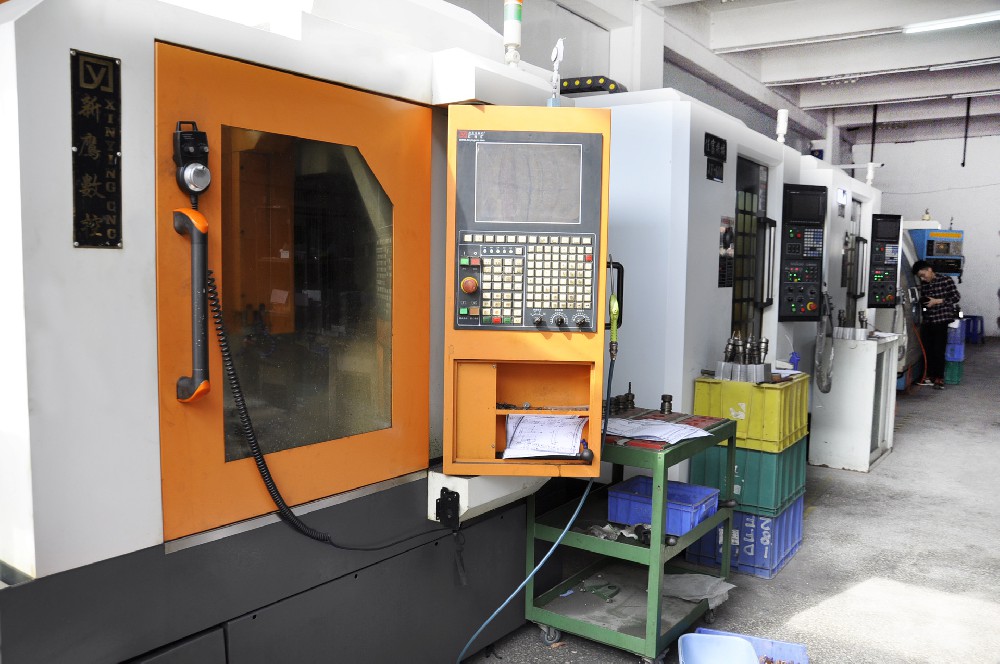
1. Many resins and additives with high corrosion resistance have a corrosive effect on the surface of the mold cavity. This corrosion causes the metal on the surface of the mold cavity to dissolve and peel off, the surface condition to deteriorate, and the quality of the plastic parts to deteriorate. So, it is best to use corrosion-resistant steel or to chrome or nickel plated the surface of the mold cavity.
2. The glossiness and accuracy of the surface of plastic parts with good wear resistance are directly related to the wear resistance of the plastic mold cavity surface, especially when glass fiber, inorganic fillers, and certain pigments are added to some plastics, they flow at high speed together with the plastic melt in the flow channel and mold cavity, causing great friction on the cavity surface. If the material is not wear-resistant, it will quickly wear out and damage the quality of the plastic part.
3. Good dimensional stability requires the temperature of the plastic mold cavity to be above 300 ℃ during plastic molding. For this reason, it is best to choose tool steel (heat-treated steel) that has undergone appropriate tempering treatment. Otherwise, it will cause changes in the microstructure of the material, resulting in changes in the size of the plastic mold.
4. Easy to process mold parts are mostly made of metal materials, some of which have complex structural shapes. In order to shorten the production cycle and improve efficiency, it is required that the mold materials be easy to process into the shape and accuracy required by the drawings.
5. Plastic parts with good polishing performance usually require good gloss and surface condition, so the roughness of the cavity surface is required to be very small. Therefore, surface processing such as polishing, grinding, etc. must be carried out on the cavity surface. Therefore, the selected steel should not contain rough impurities and pores.
6. In order to improve hardness and wear resistance, plastic molds generally need to undergo heat treatment, but this treatment should make the size change very small. Therefore, it is best to use pre hardened steel that can be machined by cutting.