 wilsin@wilsin-mold.com


Better Touch Better Business
Contact Sales at WILSIN MOLD INDUSTRIAL (HK) CO.,LTD.
Welcome to WILSIN MOLD INDUSTRIAL (HK) CO.,LTD.!
Keep up with the latest developments in the plastic mold industry! The latest material applications, cutting-edge manufacturing technologies, and changes in market demand are presented to you. Accurately insight into industry trends to help you seize opportunities in the field of plastic molds. Real time updates, constantly exciting, come and get first-hand information!
During the processing of molds, common defects are the most troublesome for everyone. These defects can directly affect the performance of the workpiece and even prevent it from being used here. Therefore, when processing molds, we must try our best to avoid some defects. Below are seven magic weapons for this problem.
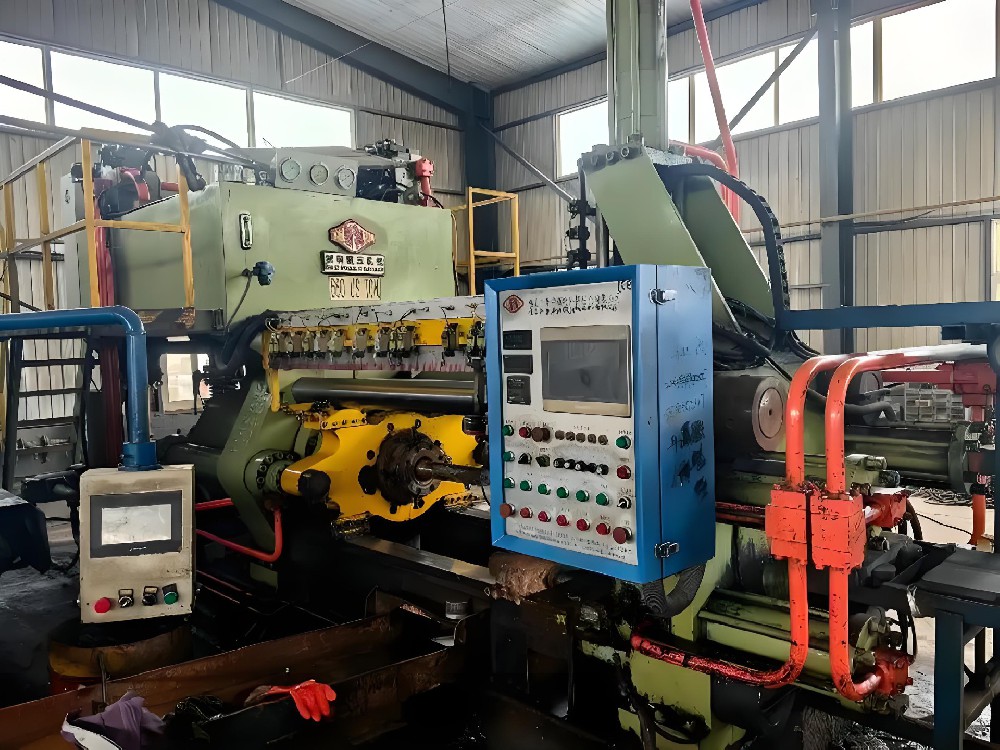
1. Reasonable selection and dressing of grinding wheels, using white corundum grinding wheels is better. Its performance is hard and brittle, and it is easy to produce new cutting edges, so the cutting force is small and the grinding heat is small. Medium particle size, such as 46-60 mesh, is better. In terms of grinding wheel hardness, medium soft and soft (ZR1, ZR2 and R1, R2) grinding wheels are used, that is, coarse-grained and low hardness grinding wheels with good self excitation can reduce cutting heat. It is very important to choose the appropriate grinding wheel during precision grinding. For the high vanadium and high molybdenum conditions of mold steel, GD single crystal corundum grinding wheel is more suitable. When processing hard alloys and materials with high quenching hardness, organic bonded diamond grinding wheel is preferred. Organic bonded grinding wheel has good self grinding performance, and the roughness of the ground workpiece can reach Ra0.2 μ m. In recent years, with the application of new materials, CBN (cubic boron nitride) grinding wheel has shown very good processing effect. It is more effective than other types of grinding wheels in precision machining on CNC forming grinding machines, coordinate grinding machines, and CNC internal and external cylindrical grinding machines. In grinding processing, attention should be paid to timely dressing the grinding wheel to maintain its sharpness. When the grinding wheel becomes dull, it will slide and squeeze on the surface of the workpiece, causing burns and a decrease in strength.
2. Reasonable use of cooling and lubricating fluid in mold processing, exerting the three major functions of cooling, washing, and lubrication, keeping the cooling and lubricating clean, thereby controlling the grinding heat within the allowable range to prevent thermal deformation of the workpiece. Improve the cooling conditions during grinding, such as using oil immersed grinding wheels or internally cooled grinding wheels. Introduce cutting fluid into the center of the grinding wheel, and the cutting fluid can directly enter the grinding area, exerting an effective cooling effect and preventing surface burns on the workpiece.
3. Reduce the quenching stress after heat treatment to the minimum, because the quenching stress and mesh carbide structure undergo phase transformation under the action of grinding force, which can easily cause cracks in the workpiece. For precision molds, in order to eliminate residual stresses from grinding, low-temperature aging treatment should be carried out after grinding to improve toughness.
4. To eliminate grinding stress, the mold can also be immersed in a salt bath at 260~315 ℃ for 1.5 minutes, and then cooled in oil at 30 ℃. This can reduce hardness by 1HRC and residual stress by 40%~65%.
5. For precision grinding of precision molds with dimensional tolerances within 0.01mm, attention should be paid to the influence of environmental temperature, and constant temperature grinding is required. According to calculations, for a 300mm long steel component, when the temperature difference is 3 ℃, there is a variation of about 10.8 μ m in the material (10.8=1.2 × 3 × 3, with a deformation of 1.2 μ m/℃ per 100mm). The influence of this factor needs to be fully considered in all precision machining processes.
6. Adopting electrolytic grinding processing to improve the precision and surface quality of mold manufacturing. During electrolytic grinding, the grinding wheel scrapes off the oxide film instead of grinding metal, resulting in less grinding force and heat, and no occurrence of grinding burrs, cracks, burns, etc. Generally, the surface roughness can be better than Ra0.16 μ m; In addition, the wear of grinding wheels is relatively small. For example, when grinding hard alloys, the wear of silicon carbide grinding wheels is about 400% to 600% of the weight of the hard alloy ground. When using electrolytic grinding, the wear of grinding wheels is only 50% to 100% of the amount of hard alloy ground.
7. Reasonably select the grinding amount and adopt precision grinding methods with smaller radial feed rates or even fine grinding. If the radial feed rate and grinding wheel speed are appropriately reduced, and the axial feed rate is increased, the contact area between the grinding wheel and the workpiece can be reduced, and the heat dissipation conditions can be improved, thereby effectively controlling the increase in surface temperature.